A storage unit can make life easier during a move, renovation, downsizing, college transition, estate cleanout, or temporary housing change. It can also become a place where belongings disappear from memory. Six months later, you may know you rented storage, but not which boxes are inside, where the receipt is, or whether the missing tool is in the garage, the unit, or a family member's basement.
A storage unit inventory gives you a simple record: what went into storage, where it came from, what condition it was in, which box or section it belongs to, and which items are valuable, fragile, or needed soon.
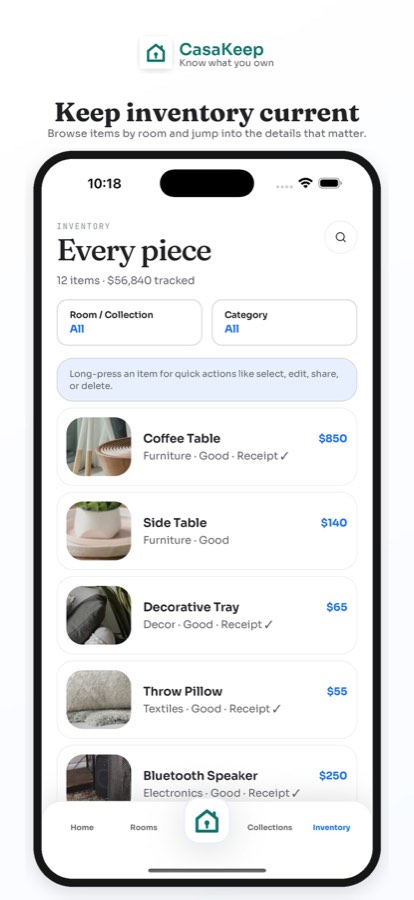
CasaKeep helps you build that record with item notes, photos, values, receipts, warranties, optional locations, optional collections, and optional scan help. It is useful for self-storage, moving storage, portable containers, garage overflow, and U-Haul-style storage during a move.
What to document before putting items in storage
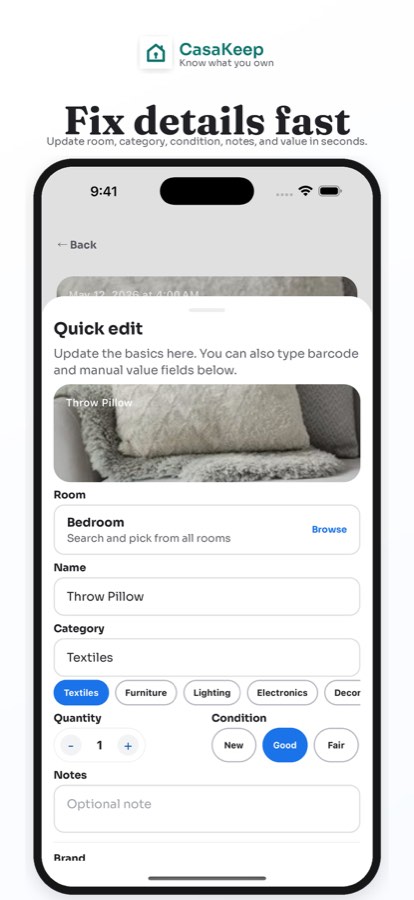
Start before the unit fills up. Photograph furniture, electronics, appliances, tools, bikes, seasonal gear, documents, collectibles, art, keepsakes, boxes, and anything fragile or expensive. Add item names, room origin, condition, value if known, and notes.
For boxes, you do not need to create a record for every tiny item. Start with box groups that matter: Kitchen small appliances, Winter clothes, Documents, Camping gear, Photos, Office equipment, Holiday decor, or Tools.
For higher-value items, create individual records. A TV, laptop, bicycle, camera, instrument, toolbox, furniture set, or artwork deserves more than a vague box label.
Use rooms, collections, or simple notes for storage
There is no special rule for storage. If the unit acts like another location, use a room or location note called Storage unit.
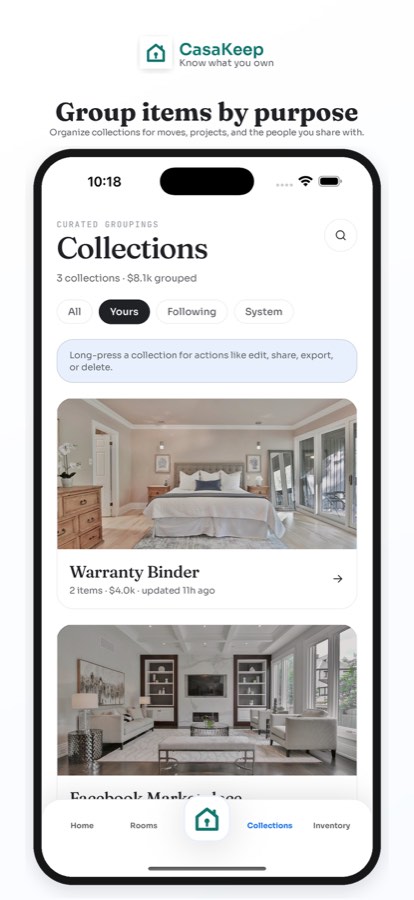
You can also create storage collections. Examples include Need soon, Fragile, Long-term storage, Sell later, Donate later, Renovation storage, or College storage. A stored item can still have its original room and also appear in one of these collections.
Use the setup you will maintain. If a room helps, use a room. If a collection helps, use a collection. If a box note is enough, use a note.
Storage inventory workflow
Before packing, add the major items from each room. Take photos while belongings are visible. Add condition notes for furniture, electronics, art, and fragile items.
During packing, add box labels or short storage notes. Keep labels simple and visible. A CasaKeep note like Blue bin A3, back left of unit or Fragile, top shelf can save time later.
After moving items into storage, update the location, storage note, or collection if needed. When something leaves storage, update the record so it reflects the current contents.
Why storage documentation matters
Storage is often temporary, but temporary can last. A clear inventory helps when you need to find a box, unpack in stages, sell stored furniture, donate extra items, review insurance documentation, or explain to a family member what is inside the unit.
Photos matter because storage labels are limited. A photo of a couch, bike, tool chest, or stack of labeled bins gives you a faster visual reference than memory. For electronics, serial numbers and receipts can be useful. For furniture, condition notes can help you remember what was already scratched, worn, or wrapped.
CasaKeep keeps these details attached to the item record, including the photos and notes you add.
Storage use cases CasaKeep supports
Use CasaKeep for moving storage, apartment overflow, garage overflow, college move-out, renovation storage, downsizing, estate cleanouts, seasonal gear, divorce property handoff, roommate moves, and temporary storage between homes.
The goal is not to catalog every tiny item. The goal is to know what is inside well enough to make decisions without opening every box.
FAQ
What should a storage unit inventory include?
Include item names, box labels, photos, room origin, condition, value if known, fragile notes, storage location, receipts, warranties, and serial numbers for electronics.
Should I list every item in every box?
Not at first. Start with valuable, fragile, hard-to-replace, or hard-to-find belongings, then use box-level records for ordinary grouped items.
Can CasaKeep help with moving storage?
Yes. CasaKeep can organize stored belongings with item details, photos, box notes, optional rooms, and optional collections so the inventory stays useful during and after a move.
Know what is in storage without opening every box.
Record major items, useful box labels, photos, and location notes before the unit turns into guesswork.