An estate inventory can become overwhelming because it mixes practical work with emotional work. You may need to understand what is in the home, decide what to keep, sell, donate, store, or give to family, and keep enough detail that people can make decisions without relying on memory alone.
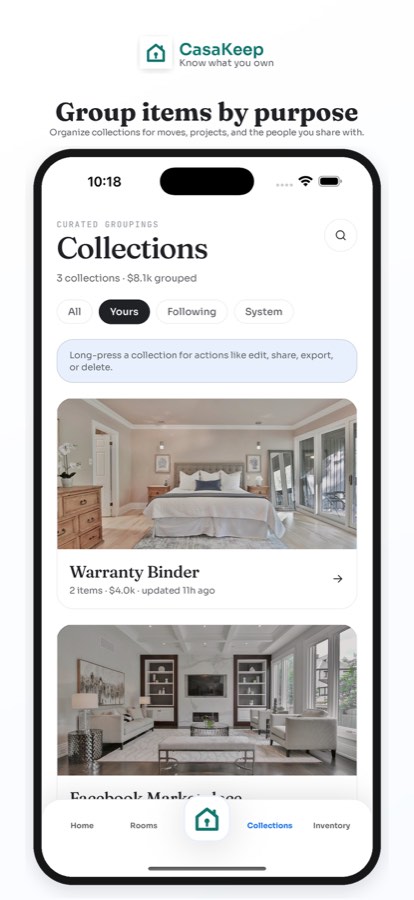
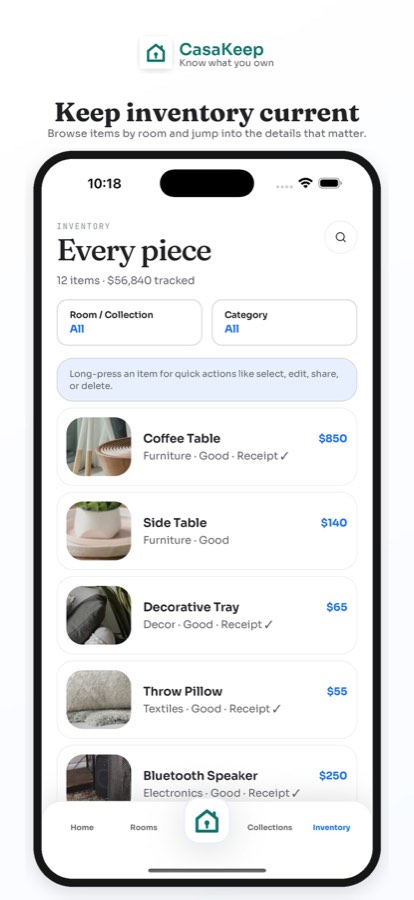
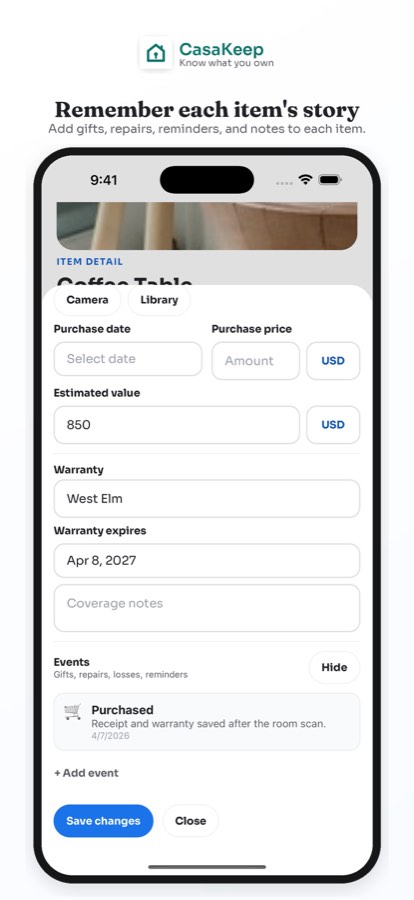
CasaKeep helps with the household inventory part of that process. You can document belongings, add locations when useful, attach photos, capture notes, record known values, save receipts or warranty details when available, and group items into collections for the next step.
This guide is not legal, tax, or probate advice. For formal estate requirements, follow the instructions from the right professional or local authority. CasaKeep is a practical way to organize the belongings themselves so the work feels less scattered.
What to document during an estate cleanout
Start with a walkthrough. Add furniture, electronics, appliances, tools, jewelry, watches, cameras, art, collectibles, musical instruments, documents, family keepsakes, vehicles, bikes, and specialty equipment. Add the room or location when it helps someone find the item later.
For each item, document the name, room, photo, condition, value if known, brand or model, serial number when visible, notes, and any receipt or warranty context you find. If a value is uncertain, leave it blank or write a plain note. CasaKeep is not a pricing authority. It gives you a cleaner place to keep the facts you have.
Photograph shelves, closets, garages, storage rooms, and boxes before sorting. Even broad room photos can help later when a family member asks where something was or whether a category of belongings was checked.
Use collections for sell, donate, keep, and store decisions
Estate work usually needs lists that cut across rooms. A dining room chair, a garage tool, and a bedroom lamp may all belong in Sell. Those items can still keep their original room. Family photos, documents, and heirlooms may belong in Keep. Extra furniture and seasonal items may go to storage while decisions are made.
Create collections such as Sell, Donate, Keep, Family handoff, Needs appraisal, Storage unit, Documents, Keepsakes, and Unsure. Add items as decisions become clearer.
Collections help the inventory stay useful after the first walkthrough. Instead of asking everyone to remember what moved where, the record can show which items are still in the home, which are being sold, which are waiting for family, and which were moved to storage.
Estate selling and donation workflow
Before selling, document the item while it is still in place. Take clear photos, add condition notes, and record dimensions or model details if they matter. If you later list the item on a marketplace, with an estate-sale company, or through a local buyer, the inventory gives you a prepared starting point.
For donations, create a Donate collection and add the items before they leave the home. Keep notes about where items went if that matters to the household record. CasaKeep does not replace tax guidance or donation receipt rules, but it can help you avoid losing track of what left.
For family handoff, create collections by person or destination. Add photos and short notes so the recipient can recognize the item. This is especially useful for keepsakes, furniture, tools, kitchen items, books, photos, and inherited household pieces.
Storage during estate work
Estate cleanouts often create temporary storage. Items may move into a storage unit, garage, relative's home, or moving container while decisions continue. Document the move before boxes disappear.
Use a room, location note, or collection called Storage unit, whichever you will actually maintain. Add major items, box groups, fragile belongings, documents, and anything that would be hard to find again. Include box labels and location notes when useful.
If storage is temporary, update CasaKeep when items are sold, donated, returned to family, or moved to a permanent place. The inventory should follow the item, not only the original room.
How CasaKeep fits estate planning and household continuity
CasaKeep is useful before an estate cleanout too. A living home inventory can help family understand important belongings, receipts, warranties, keepsakes, storage locations, and household context while the owner is still able to explain them.
Manual entry remains the foundation. Room scan help can speed up a first pass, but estate work needs human judgment. You decide what the item is, why it matters, who should see it, and what notes belong with it.
When someone else needs context, sharing and export workflows can help you prepare a practical record. Share only what fits the situation: a room, a collection, a set of items, or the records needed for a specific conversation.
FAQ
What should an estate inventory list include?
Include item names, rooms, photos, condition notes, known values, receipts when available, serial numbers for electronics, and decisions such as keep, sell, donate, store, or family handoff.
Can CasaKeep price items for an estate sale?
No. CasaKeep helps organize item records. For pricing, use your own research, local market context, an estate-sale professional, an appraiser, or other trusted guidance.
Is CasaKeep a probate or legal inventory tool?
No. CasaKeep is a household inventory app for individuals and families. Use it to organize belongings, photos, and notes, then follow professional guidance for formal legal or tax requirements.
Make the estate list easier to discuss.
Document belongings, add decision lists where helpful, and keep notes clear enough for family handoff.