Insurance paperwork is easier when your household record already exists. The difficult part is not only listing belongings. It is connecting the details: what the item was, where it lived, what it looked like, what it cost, whether you had a receipt, whether there was a serial number, and what else you remember about it.
CasaKeep helps you build that documentation gradually. You can add photos, record values, attach receipts, save warranties, note serial numbers, add a location when useful, and keep item context in one place. The app does not promise that an insurer will accept every detail or approve a claim. It gives you a clearer record to work from when documentation matters.
What to document for insurance purposes
Start with belongings that are valuable, hard to replace, or hard to remember under stress. Electronics, appliances, furniture, tools, bikes, jewelry, watches, cameras, musical instruments, art, collectibles, and work equipment are common first items.
For each item, document the item name, photo, value, purchase date, receipt, serial number, model number, warranty, condition, and room or location if it helps. If you only know some of those fields, capture them now and improve the record later.
For rooms with many ordinary items, document categories and representative photos. Clothing, kitchenware, books, toys, decor, and linens may not need individual records at first, but they still belong in your broader household picture.
How CasaKeep supports insurance documentation
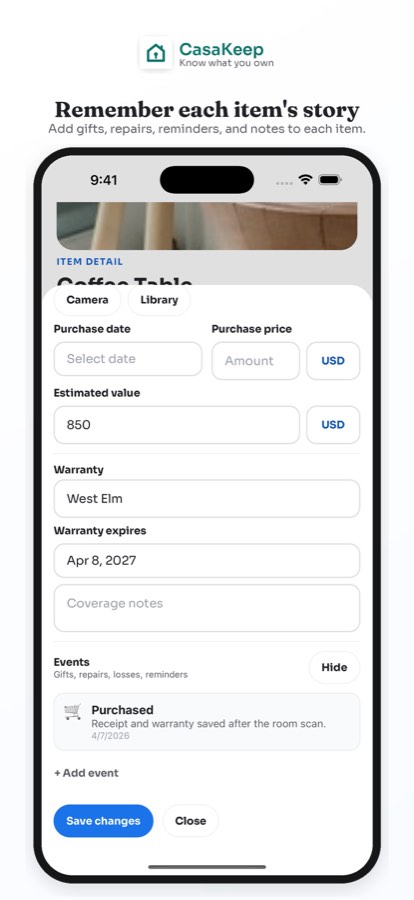
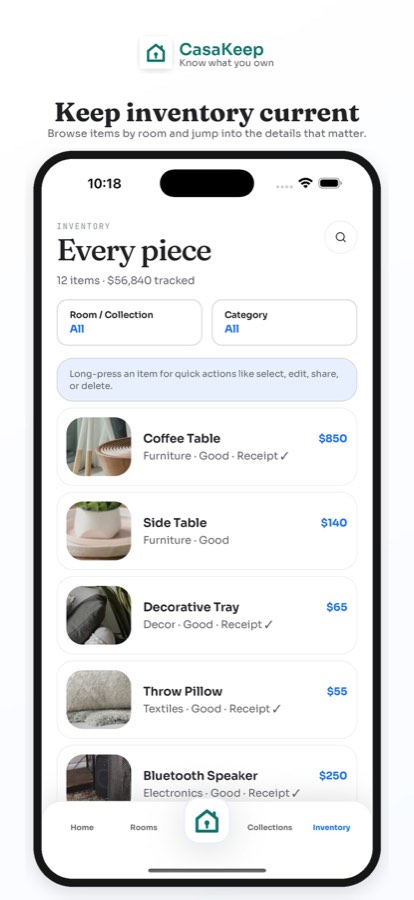
CasaKeep keeps the record centered on the item. The inventory list helps you browse belongings, and room labels can help when you want to walk through the home by location. Item detail screens keep photos, notes, value, receipts, and warranties tied to the right object.
When you have a receipt, add it. When you find a serial number, add it. When a value changes or an item moves, update it. Over time, the record becomes more useful because the details stay close to the item.
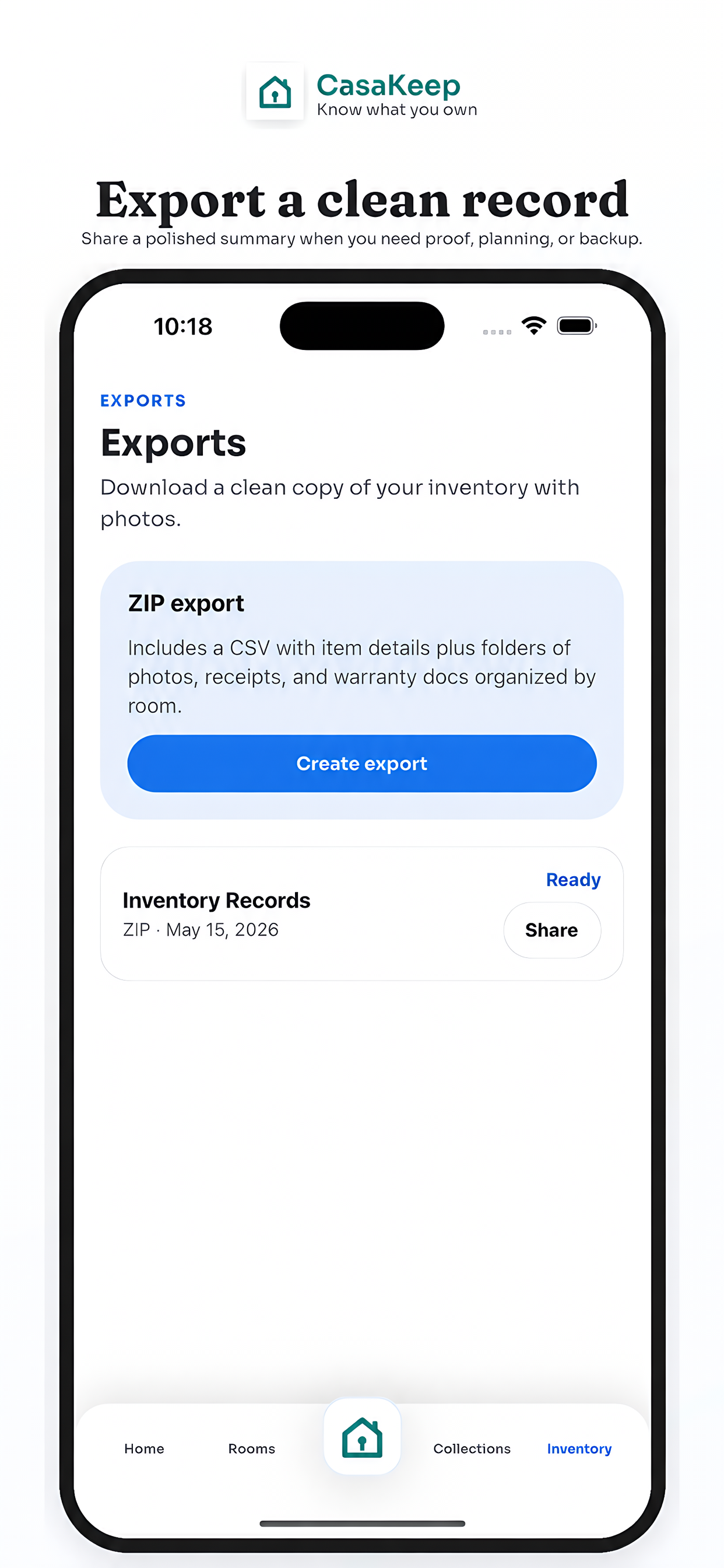
Export and sharing flows can help you move records when you need to discuss them with someone else. These are practical records for documentation and planning, not guaranteed claim outcomes.
When to build the inventory
The best time is before anything goes wrong. Start while the house is calm. Pick one room, add the important items, then move to the next room another day.
Do not wait for perfect receipts. Do not wait for a full weekend. A partial record of your most important items is already valuable. Add photos first, then values, receipts, warranties, and serial numbers as you find them.
After major purchases, open CasaKeep and add the item immediately. That habit keeps the inventory current without a painful rebuild.
How room scan help fits in
Room scan help can create a faster starting point. It can help identify obvious items and reduce typing. But the final record should be reviewed by you. You know what the item is, what it cost, where the receipt lives, and what details matter.
Room scan is only a starting aid. CasaKeep's main job is to help you build and maintain a better household record.
Insurance use cases
Use CasaKeep before theft, fire, water damage, storm damage, wildfire evacuation, moving, storage, renovation, and estate handoff. In each case, the app helps answer the same practical questions: what was there, where was it, what proof do I have, and what details are attached?
FAQ
What should I include in a home inventory app for insurance?
Photos, item names, location notes when useful, values, receipts, warranties, serial numbers, purchase dates, and condition notes.
Is CasaKeep a claim tool?
No. CasaKeep helps you organize household documentation. It does not guarantee claim approval or replace advice from your insurer.
Should I add low-value items?
Start with high-value and hard-to-replace items. Add ordinary household categories over time.
Create the record before paperwork is urgent.
Start with important belongings, add proof where you have it, and keep the details easy to review.