Renters insurance can cover belongings, but it cannot remember what was in your apartment for you. After a break-in, fire, water leak, or sudden move, the hard part is often not knowing that you owned something. It is remembering the model, the room, the approximate value, where the receipt went, and whether you have a photo that proves the item was yours.
A renters insurance inventory is worth starting before anything goes wrong. It does not need to be complete on day one. Start with the items that would be hardest to replace from memory, then add more as your apartment changes.
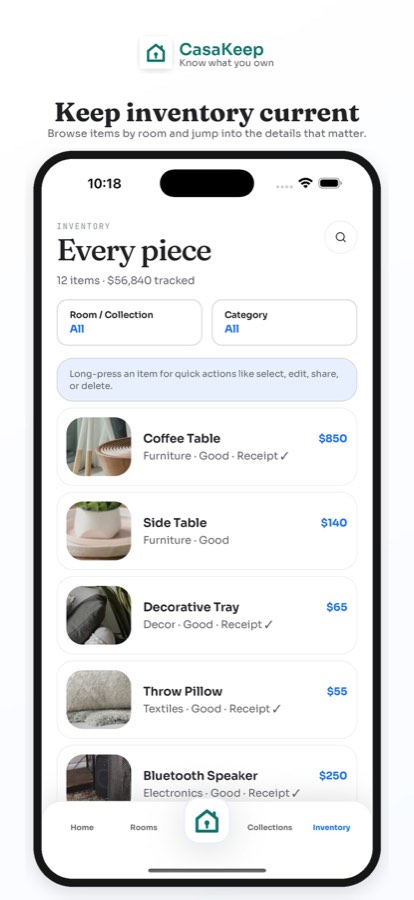
CasaKeep helps renters build that record item by item. You can add a room or location when it helps, attach photos and receipts, save serial numbers, record values, keep warranty notes, and use optional collections for lists like valuables, storage, or work equipment. Room scan help is available when you want a faster first pass, but you stay in control of the final details.
What are the key items to include in a renters insurance home inventory?
Start with the belongings that would be expensive, stressful, or easy to forget. Electronics are usually first: laptops, tablets, phones, cameras, monitors, speakers, gaming consoles, routers, and smart-home devices. Then add furniture, bikes, tools, small appliances, cookware, musical instruments, jewelry, watches, art, collectibles, hobby gear, and work-from-home equipment.
Do not ignore ordinary items if they add up. Clothing, shoes, kitchen gear, linens, books, decor, and storage bins may feel too common to list one by one at first, but a room-level record can still help. You can document the most important individual items now and add groups over time.
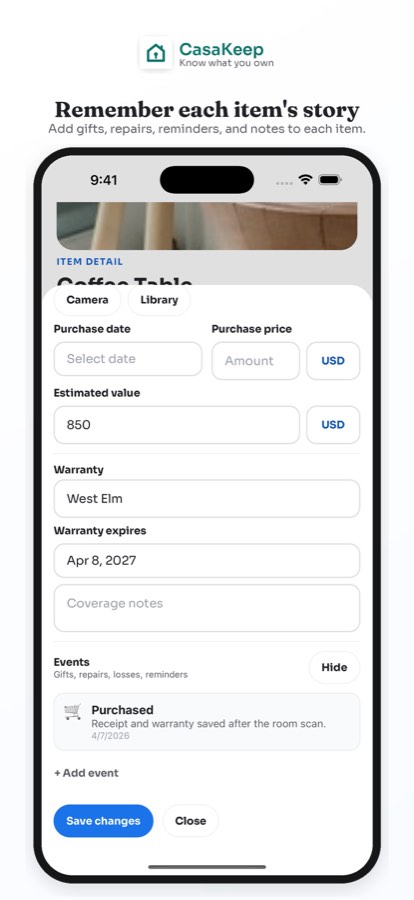
For each item, capture the name, room, category, photo, value, purchase date if known, receipt if you have it, serial number for electronics, warranty details, and a short condition note. If you do not have every field, add what you know. A clear partial record is much better than relying on memory.
What proof of ownership should renters keep?
Renters should keep the proof they can realistically maintain: item photos, receipt photos, serial numbers, model names, purchase dates, warranty notes, room or location notes, and values. A receipt is helpful, but it is not the only useful record. A photo of the item in your home, a serial number for electronics, and a note about where it was kept can all make the inventory easier to understand later.
CasaKeep keeps those details attached to the item. You can add the record first, then improve it when you find a receipt or warranty document. Insurance documentation and claim requirements vary; follow your insurer’s instructions. CasaKeep does not guarantee that a record will be accepted as sufficient or that a claim will be approved.
Where can renters find a home inventory template?
Renters can start with a simple template: room, item name, category, value, photo, receipt, serial number, warranty, condition, and notes. The template matters less than whether you keep it current.
CasaKeep gives renters that structure in a mobile app. You can walk room by room, add photos and receipts from your phone, save serial numbers and warranties, and export CSV data when you need a spreadsheet-friendly copy. The full ZIP export includes inventory.csv plus image folders for item photos, receipt photos, and warranty-doc photos.
How CasaKeep helps renters keep the list usable
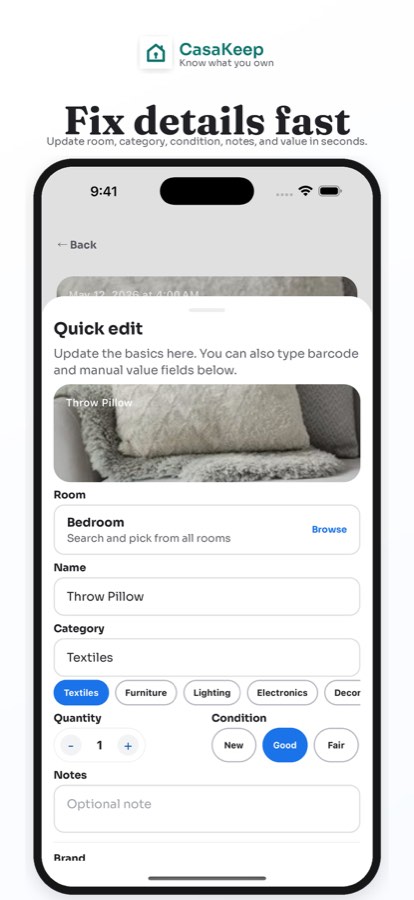
A spreadsheet can hold a basic inventory table. CasaKeep gives each belonging its own editable record. Add a room or location if that helps you find it later: bedroom, kitchen, closet, storage unit, garage, or wherever it lives.
When you add an item, CasaKeep gives you a place for the details renters often lose: photos, receipts, warranty dates, serial numbers, notes, and value. You can update the item later when you buy a replacement, move it to another room, sell it, donate it, or pack it away.
Collections are optional lists. A laptop can be in the office and also in a Work equipment collection. A bike can have no room yet and still be in Valuables. Use collections only when they make a real task easier.
A simple renter inventory workflow
Walk through one room at a time. In each room, add the five to ten items you would most hate to replace from memory. Take clear photos in normal light. For electronics, photograph the item and capture the serial number if it is visible. For furniture, add brand, approximate purchase date, and value if you know it.
Next, search your email for receipts from major stores and attach or note the purchases you find. Do not make receipt hunting the blocker. Add the item first, then improve the record later.
Finally, set a monthly habit: add new purchases, update moved items, and remove things you no longer own. The goal is a current inventory, not a one-time document you forget.
Why this matters for apartment life
Renters move more often than homeowners. Belongings cross apartments, storage units, family homes, and shared spaces. A simple item record helps you know what is yours, where it is now, and what may need documentation later.
CasaKeep is built for individuals and households. It is not a landlord inspection tool or a property-management database. It is for the person who wants a clear answer to a practical question: what do I own, where is it, and what proof do I have?
FAQ
Do renters really need a home inventory?
Yes. A renter's belongings can be valuable even in a small apartment. A home inventory helps you remember and document what you owned after theft, fire, water damage, loss, or a move.
Do I need receipts for every item?
A receipt is not required to create an item in CasaKeep. Insurer documentation requirements vary, so ask your insurer which records it requires or accepts.
Is CasaKeep only for renters insurance?
No. Renters can also use CasaKeep for moving, storage, roommate handoffs, warranties, receipts, donations, and everyday organization.
Start before you need the insurance list.
Add the belongings that would be hardest to remember later, then improve the details over time.