An estate inventory needs enough detail that another person can understand what exists, where it is, why it matters, and what decision may need to happen next. It does not always mean every fork, towel, paperback, and coffee mug needs its own record. The right level of detail depends on the item, the family situation, the estate process, and any instructions from an attorney, court, executor, or personal representative.
CasaKeep can help with the practical household side: photos, item notes, room context, values you know, receipts, warranty records, serial numbers, and collections such as Keep, Sell, Donate, Storage, or Family review. It is not legal advice and does not replace local estate requirements.
The simple rule
Document individually when the item is valuable, sentimental, disputed, hard to identify, hard to replace, or likely to need a decision. Group items when the exact individual object does not matter as much as the category.
For example, a piano, engagement ring, signed artwork, camera, tool chest, laptop, antique desk, or family photo album should usually have its own entry. A drawer of everyday utensils might be documented as a group unless there is something special inside it.
The goal is clarity. If someone else looked at the record six months from now, would they know what the item is and what should happen next?
Items that usually deserve individual records
Start with valuables and irreplaceable items. Include jewelry, watches, art, antiques, collectibles, musical instruments, electronics, appliances, tools, firearms where legally applicable, vehicles, bikes, furniture of value, family keepsakes, documents, and anything with a known buyer, appraiser, beneficiary, or dispute risk.
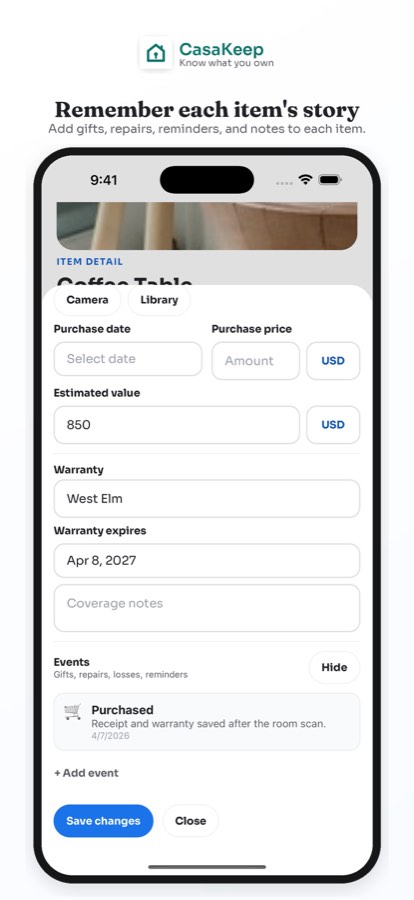
For each important item, capture a clear photo, room or location, short description, brand or maker if known, serial number or model number if available, estimated value if you have one, receipt or appraisal if available, condition notes, and any family context.
If you do not know the value, do not invent one. Mark it as unknown, needs appraisal, or needs family review.
Items that can often be grouped
Ordinary household goods can often be grouped by room or category. Examples include kitchenware, books, linens, clothing, decor, pantry items, garage supplies, holiday decorations, and low-value duplicate items.
A grouped record might say Kitchen cookware, Guest room linens, Garage hand tools, or Holiday bins in basement. Add photos of the group and notes about anything that might matter.
Grouping keeps the inventory usable. An estate inventory that is too detailed can become impossible to finish.
How CasaKeep helps
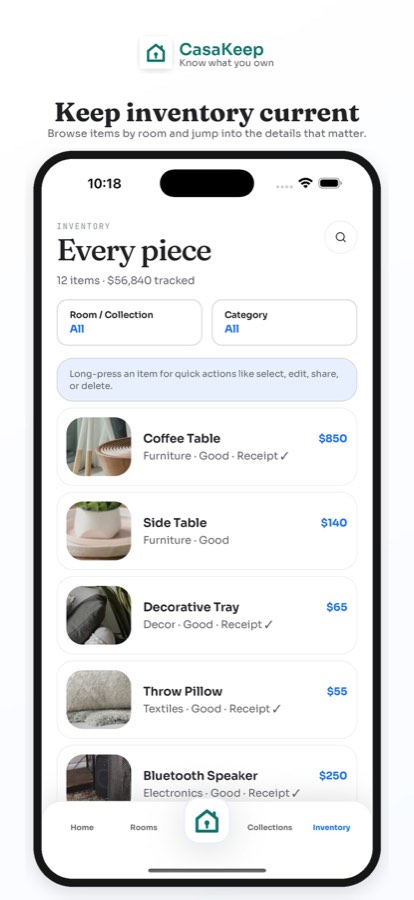
CasaKeep helps you create item records while you walk the home. Add the items that need individual attention, photograph them, and use notes to capture family context. Rooms help show where something was found. Collections help organize decisions.
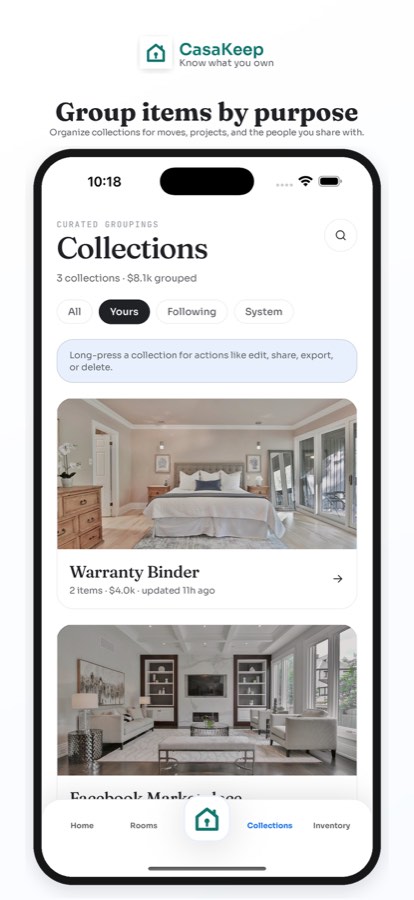
Useful collections might include Appraise, Family review, Sell, Donate, Keep with house, Storage, Documents, and Sentimental. The same item can live in a room and also belong to one or more collections.
This gives the executor or family a clearer working record without turning the app into a legal filing system.
FAQ
Does every estate item need its own line?
It depends on the estate process and required form. Important, valuable, sentimental, or disputed items may need individual documentation, while some processes may permit ordinary household goods to be grouped. Follow instructions from the attorney, court, executor, or personal representative handling the estate.
Is CasaKeep an estate legal form?
No. CasaKeep helps organize household belongings and supporting details. Follow local legal requirements and professional advice for official estate filings.
What if family members disagree about an item?
Give that item its own record with photos, notes, location, and any known context. Clear documentation can reduce confusion, even when it cannot resolve the decision by itself.
Start small and keep the record current.
Add the belongings that matter most, then update the details when life changes.